
Northland > Private Hospitals & Specialists >
Allevia Kensington Hospital - Eye Surgery - Ophthalmology
Private Surgical Service, Ophthalmology
Description
Allevia Kensington Hospital offers a relaxing environment which blends modern facilities with traditional personal attention. The hospital has five operating theatres and a 21 bed Inpatient Suite for patients staying overnight or longer. A Day Stay unit provides an area for day case patients to relax before travelling home.
All our specialists are experienced and highly skilled, with many being recognised nationally as experts in their fields. Our nursing staff are selected not only for their clinical ability but also for their friendly and caring approach. During your stay we aim to provide you with excellent quality surgical care backed up with exceptional nursing care and service.
Ophthalmology is the branch of specialist medicine that is focused on the health of eyes and their surrounding tissues, including muscles, bones, eyelids, and tear production/drainage systems.
This surgical service is provided at our facility by the following medical specialists. For further information please seek a referral through your GP or contact your preferred specialist directly.
Consultants
-

Dr David Dalziel
Ophthalmologist
-

Dr Brian Kent-Smith
Ophthalmologist
-
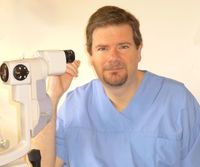
Dr Andrew Watts
Ophthalmologist
Procedures / Treatments
Cataracts are the most common age-related occurrence in eyes. The lens becomes thicker and stiffer and appears yellow and cloudy. Eventually it may turn white, changing the colour of the pupil. A cataract may cause your vision to become fuzzy in a progressive fashion and may also be the cause of disabling glare. Once a cataract affects vision too much, a cataract removal operation is generally advised. This decision is usually made in consultation with an eye specialist. The operation is almost always done under local anaesthetic. A tiny incision is made in your eye and the cataract is broken up into small pieces using ultrasound vibrations. Once all the pieces have been removed, an artificial lens is implanted into your eye. It is relatively short in duration and an overnight stay in hospital is not required. Post-operative care consists of eye drops and a check at 1-2 days then after 2-4 weeks.
Cataracts are the most common age-related occurrence in eyes. The lens becomes thicker and stiffer and appears yellow and cloudy. Eventually it may turn white, changing the colour of the pupil. A cataract may cause your vision to become fuzzy in a progressive fashion and may also be the cause of disabling glare. Once a cataract affects vision too much, a cataract removal operation is generally advised. This decision is usually made in consultation with an eye specialist. The operation is almost always done under local anaesthetic. A tiny incision is made in your eye and the cataract is broken up into small pieces using ultrasound vibrations. Once all the pieces have been removed, an artificial lens is implanted into your eye. It is relatively short in duration and an overnight stay in hospital is not required. Post-operative care consists of eye drops and a check at 1-2 days then after 2-4 weeks.
Cataracts are the most common age-related occurrence in eyes. The lens becomes thicker and stiffer and appears yellow and cloudy. Eventually it may turn white, changing the colour of the pupil. A cataract may cause your vision to become fuzzy in a progressive fashion and may also be the cause of disabling glare.
Once a cataract affects vision too much, a cataract removal operation is generally advised. This decision is usually made in consultation with an eye specialist. The operation is almost always done under local anaesthetic. A tiny incision is made in your eye and the cataract is broken up into small pieces using ultrasound vibrations. Once all the pieces have been removed, an artificial lens is implanted into your eye. It is relatively short in duration and an overnight stay in hospital is not required. Post-operative care consists of eye drops and a check at 1-2 days then after 2-4 weeks.
Treatment is aimed at improving drainage of the excess fluid in the eye. Laser Surgery: there are several different glaucoma laser techniques, but all involve aiming a laser beam into the eye which you will see as a bright light, similar to a camera flash. Trabeculectomy: this is a surgical procedure in which a tiny hole is made in the sclera (white of the eye) that provides an alternative fluid drainage pathway.
Treatment is aimed at improving drainage of the excess fluid in the eye. Laser Surgery: there are several different glaucoma laser techniques, but all involve aiming a laser beam into the eye which you will see as a bright light, similar to a camera flash. Trabeculectomy: this is a surgical procedure in which a tiny hole is made in the sclera (white of the eye) that provides an alternative fluid drainage pathway.
Treatment is aimed at improving drainage of the excess fluid in the eye.
Laser Surgery: there are several different glaucoma laser techniques, but all involve aiming a laser beam into the eye which you will see as a bright light, similar to a camera flash.
Trabeculectomy: this is a surgical procedure in which a tiny hole is made in the sclera (white of the eye) that provides an alternative fluid drainage pathway.
This procedure typically involves making a small cut (incision) in the fold of the upper eyelid and shortening or reattaching the stretched or weakened eyelid lifting muscle.
This procedure typically involves making a small cut (incision) in the fold of the upper eyelid and shortening or reattaching the stretched or weakened eyelid lifting muscle.
This procedure typically involves making a small cut (incision) in the fold of the upper eyelid and shortening or reattaching the stretched or weakened eyelid lifting muscle.
Laser: can be used to mend tears, seal leaking blood vessels or reattach minor retinal detachments. Cryopexy (freezing): can be used to mend tears, seal leaking blood vessels or reattach minor retinal detachments. Vitrectomy: tiny incisions (cuts) are made in the white of your eye and the jelly-like substance (vitreous) in the back of your eye is removed.
Laser: can be used to mend tears, seal leaking blood vessels or reattach minor retinal detachments. Cryopexy (freezing): can be used to mend tears, seal leaking blood vessels or reattach minor retinal detachments. Vitrectomy: tiny incisions (cuts) are made in the white of your eye and the jelly-like substance (vitreous) in the back of your eye is removed.
Laser: can be used to mend tears, seal leaking blood vessels or reattach minor retinal detachments.
Cryopexy (freezing): can be used to mend tears, seal leaking blood vessels or reattach minor retinal detachments.
Vitrectomy: tiny incisions (cuts) are made in the white of your eye and the jelly-like substance (vitreous) in the back of your eye is removed.
An incision (cut) is made in the lining of the eye (the clear film that covers the eyeball). The squint is corrected by repositioning the weak muscle or muscles from their original position to a new position on the eyeball.
An incision (cut) is made in the lining of the eye (the clear film that covers the eyeball). The squint is corrected by repositioning the weak muscle or muscles from their original position to a new position on the eyeball.
An incision (cut) is made in the lining of the eye (the clear film that covers the eyeball). The squint is corrected by repositioning the weak muscle or muscles from their original position to a new position on the eyeball.
Disability Assistance
Wheelchair access, Mobility parking space, Wheelchair accessible toilet
Website
Contact Details
Allevia Kensington Hospital
Northland
-
Phone
(09) 437 9080
-
Fax
(09) 437 9081
Email
Website
Reception Opening Hours:
6:30am to 6:30pm, Monday to Friday
12 Kensington Avenue
Kensington
Whangarei
Northland 0112
Street Address
12 Kensington Avenue
Kensington
Whangārei
Northland 0112
Postal Address
PO Box 8122
Kensington
Whangārei 0145
Was this page helpful?
This page was last updated at 8:53AM on October 2, 2025. This information is reviewed and edited by Allevia Kensington Hospital - Eye Surgery - Ophthalmology.