
Bay of Plenty > Private Hospitals & Specialists >
Grace Hospital - Paediatric Surgery
Private Surgical Service, Paediatrics
Description
Grace Hospital is a private surgical hospital in Tauranga committed to surgical excellence and achieving the best outcomes for our patients. Our surgeons are of the highest calibre, supported by highly trained and experienced nursing staff.
Our inpatient ward comprises 48 single rooms, each with a private en-suite bathroom and balcony. We have nine operating theatres and a three-bed High Dependency room where patients requiring dedicated nursing are cared for after surgery.
Grace offers a wide range of paediatric procedures across many specialties including general, urology, ENT, orthopaedic and plastic surgery. Our dedicated teams ensure that we develop a trusting relationship with you and your child, preparing and supporting you during your child’s stay.
Consultants
-
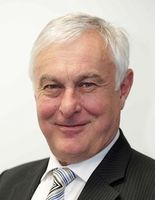
Mr Mark Fraundorfer
Urologist and Paediatric Urologist
-

Dr Askar Kukkady
Paediatric Surgeon and Urologist
-

Mr Liam Wilson
Adult and Paediatric Urologist
Ages
Child / Tamariki, Youth / Rangatahi
Fees and Charges Categorisation
Fees apply
Fees and Charges Description
Find payment information here
Languages Spoken
English
Services Provided
Laparoscopic: several small incisions (cuts) are made in the lower right abdomen (stomach) and a narrow tube with a tiny camera attached (laparoscope) in inserted. This allows the surgeon a view of the appendix and, by inserting small surgical instruments through the other cuts, the appendix can be removed. Open: an incision is made in the lower right abdomen and the appendix removed.
Laparoscopic: several small incisions (cuts) are made in the lower right abdomen (stomach) and a narrow tube with a tiny camera attached (laparoscope) in inserted. This allows the surgeon a view of the appendix and, by inserting small surgical instruments through the other cuts, the appendix can be removed. Open: an incision is made in the lower right abdomen and the appendix removed.
Laparoscopic: several small incisions (cuts) are made in the lower right abdomen (stomach) and a narrow tube with a tiny camera attached (laparoscope) in inserted. This allows the surgeon a view of the appendix and, by inserting small surgical instruments through the other cuts, the appendix can be removed.
Open: an incision is made in the lower right abdomen and the appendix removed.
The foreskin (flap of skin that covers the tip of the penis) may be removed for cultural, religious or medical reasons.
The foreskin (flap of skin that covers the tip of the penis) may be removed for cultural, religious or medical reasons.
The foreskin (flap of skin that covers the tip of the penis) may be removed for cultural, religious or medical reasons.
A fold of tissue (frenum) that attaches to the cheek, lips and/or tongue is surgically removed.
A fold of tissue (frenum) that attaches to the cheek, lips and/or tongue is surgically removed.
A fold of tissue (frenum) that attaches to the cheek, lips and/or tongue is surgically removed.
Umbilical Hernia An incision (cut) is made underneath the navel (tummy button) and the hernia (part of the intestine that is bulging through the abdominal wall) is pushed back into the abdominal cavity. The weakness in the abdominal wall is repaired. Inguinal Hernia An abdominal incision is made and the hernia is pushed back into position. The weakness in the abdominal wall is repaired. Herniotomy: an incision is made in a skin fold in the groin and the hernia sac is cut out. Herniotomy An incision is made in a skin fold in the groin and the hernia sac is cut out.
Umbilical Hernia An incision (cut) is made underneath the navel (tummy button) and the hernia (part of the intestine that is bulging through the abdominal wall) is pushed back into the abdominal cavity. The weakness in the abdominal wall is repaired. Inguinal Hernia An abdominal incision is made and the hernia is pushed back into position. The weakness in the abdominal wall is repaired. Herniotomy: an incision is made in a skin fold in the groin and the hernia sac is cut out. Herniotomy An incision is made in a skin fold in the groin and the hernia sac is cut out.
Umbilical Hernia
An incision (cut) is made underneath the navel (tummy button) and the hernia (part of the intestine that is bulging through the abdominal wall) is pushed back into the abdominal cavity. The weakness in the abdominal wall is repaired.
Inguinal Hernia
An abdominal incision is made and the hernia is pushed back into position. The weakness in the abdominal wall is repaired. Herniotomy: an incision is made in a skin fold in the groin and the hernia sac is cut out.
Herniotomy
An incision is made in a skin fold in the groin and the hernia sac is cut out.
A hydrocoele is a fluid-filled mass that forms in the scrotum. In many cases it will disappear by itself, but sometimes surgery is required to drain the fluid out.
A hydrocoele is a fluid-filled mass that forms in the scrotum. In many cases it will disappear by itself, but sometimes surgery is required to drain the fluid out.
A hydrocoele is a fluid-filled mass that forms in the scrotum. In many cases it will disappear by itself, but sometimes surgery is required to drain the fluid out.
A minor surgical procedure is performed to widen the urinary meatus or opening (where the urine exits the body).
A minor surgical procedure is performed to widen the urinary meatus or opening (where the urine exits the body).
A minor surgical procedure is performed to widen the urinary meatus or opening (where the urine exits the body).
A small incision (cut) is made in the groin on the side of the undescended testicle and the testicle pulled down into the scrotum. Sometimes a small cut will need to be made in the scrotum as well.
A small incision (cut) is made in the groin on the side of the undescended testicle and the testicle pulled down into the scrotum. Sometimes a small cut will need to be made in the scrotum as well.
A small incision (cut) is made in the groin on the side of the undescended testicle and the testicle pulled down into the scrotum. Sometimes a small cut will need to be made in the scrotum as well.
Shave Biopsy: the top layers of skin in the area being investigated are shaved off with a scalpel (surgical knife) for investigation under a microscope. Punch Biopsy: a small cylindrical core of tissue is taken from the area being investigated for examination under a microscope. Excision Biopsy: all of the lesion or area being investigated is cut out with a scalpel for examination under a microscope. Incision Biopsy: part of the lesion is cut out with a scalpel for examination under a microscope.
Shave Biopsy: the top layers of skin in the area being investigated are shaved off with a scalpel (surgical knife) for investigation under a microscope. Punch Biopsy: a small cylindrical core of tissue is taken from the area being investigated for examination under a microscope. Excision Biopsy: all of the lesion or area being investigated is cut out with a scalpel for examination under a microscope. Incision Biopsy: part of the lesion is cut out with a scalpel for examination under a microscope.
Shave Biopsy: the top layers of skin in the area being investigated are shaved off with a scalpel (surgical knife) for investigation under a microscope.
Punch Biopsy: a small cylindrical core of tissue is taken from the area being investigated for examination under a microscope.
Excision Biopsy: all of the lesion or area being investigated is cut out with a scalpel for examination under a microscope.
Incision Biopsy: part of the lesion is cut out with a scalpel for examination under a microscope.
Skin lesions can be divided into two groups: Benign (non-cancerous): e.g. moles, cysts, warts, tags. These may be removed to prevent spreading (warts), stop discomfort if the lesion is being irritated by clothing/jewellery or to improve appearance. Malignant (cancerous): basal cell and squamous cell carcinomas are generally slow growing and unlikely to spread to other parts of the body. Melanoma is a serious skin cancer that can spread to other parts of the body. Urgent removal is recommended. Surgery to remove skin lesions usually involves an office or outpatient visit, local anaesthesia (the area around the scar is numbed by injecting a local anaesthetic) and stitches. You may or may not have a dressing put on the wound and it is important to keep the area dry for 24 hours. Stitches may be removed in 1-2 weeks. You may need to take a few days off work after the surgery.
Skin lesions can be divided into two groups: Benign (non-cancerous): e.g. moles, cysts, warts, tags. These may be removed to prevent spreading (warts), stop discomfort if the lesion is being irritated by clothing/jewellery or to improve appearance. Malignant (cancerous): basal cell and squamous cell carcinomas are generally slow growing and unlikely to spread to other parts of the body. Melanoma is a serious skin cancer that can spread to other parts of the body. Urgent removal is recommended. Surgery to remove skin lesions usually involves an office or outpatient visit, local anaesthesia (the area around the scar is numbed by injecting a local anaesthetic) and stitches. You may or may not have a dressing put on the wound and it is important to keep the area dry for 24 hours. Stitches may be removed in 1-2 weeks. You may need to take a few days off work after the surgery.
Skin lesions can be divided into two groups:
- Benign (non-cancerous): e.g. moles, cysts, warts, tags. These may be removed to prevent spreading (warts), stop discomfort if the lesion is being irritated by clothing/jewellery or to improve appearance.
- Malignant (cancerous): basal cell and squamous cell carcinomas are generally slow growing and unlikely to spread to other parts of the body. Melanoma is a serious skin cancer that can spread to other parts of the body. Urgent removal is recommended.
Surgery to remove skin lesions usually involves an office or outpatient visit, local anaesthesia (the area around the scar is numbed by injecting a local anaesthetic) and stitches. You may or may not have a dressing put on the wound and it is important to keep the area dry for 24 hours. Stitches may be removed in 1-2 weeks. You may need to take a few days off work after the surgery.
A small cut is made in the scrotum, the cord supplying blood to the testicle is untwisted and both testes are sutured (stitched) to the scrotum to prevent another torsion.
A small cut is made in the scrotum, the cord supplying blood to the testicle is untwisted and both testes are sutured (stitched) to the scrotum to prevent another torsion.
A small cut is made in the scrotum, the cord supplying blood to the testicle is untwisted and both testes are sutured (stitched) to the scrotum to prevent another torsion.
Gastroscopy allows examination of the upper part of the digestive tract i.e. oesophagus (food pipe), stomach and duodenum (top section of the small intestine), by passing a gastroscope (long, flexible tube with a camera on the end) through the mouth and down the digestive tract. Images from the camera are displayed on a television monitor. Sometimes a small tissue sample (biopsy) will need to be taken during the procedure for later examination at a laboratory. Gastroscopy may be used to diagnose peptic ulcers, tumours, gastritis etc.
Gastroscopy allows examination of the upper part of the digestive tract i.e. oesophagus (food pipe), stomach and duodenum (top section of the small intestine), by passing a gastroscope (long, flexible tube with a camera on the end) through the mouth and down the digestive tract. Images from the camera are displayed on a television monitor. Sometimes a small tissue sample (biopsy) will need to be taken during the procedure for later examination at a laboratory. Gastroscopy may be used to diagnose peptic ulcers, tumours, gastritis etc.
Gastroscopy allows examination of the upper part of the digestive tract i.e. oesophagus (food pipe), stomach and duodenum (top section of the small intestine), by passing a gastroscope (long, flexible tube with a camera on the end) through the mouth and down the digestive tract. Images from the camera are displayed on a television monitor. Sometimes a small tissue sample (biopsy) will need to be taken during the procedure for later examination at a laboratory.
Gastroscopy may be used to diagnose peptic ulcers, tumours, gastritis etc.
Scar appearance can be improved by various methods including a surgical procedure known as scar revision. This usually involves cutting out the old scar, closing the wound with stitches and, in some cases, moving the scar so that it is hidden by natural features of the body. Scar revision is usually performed under local anaesthesia (the area around the scar is numbed by injecting a local anaesthetic).
Scar appearance can be improved by various methods including a surgical procedure known as scar revision. This usually involves cutting out the old scar, closing the wound with stitches and, in some cases, moving the scar so that it is hidden by natural features of the body. Scar revision is usually performed under local anaesthesia (the area around the scar is numbed by injecting a local anaesthetic).
Scar appearance can be improved by various methods including a surgical procedure known as scar revision. This usually involves cutting out the old scar, closing the wound with stitches and, in some cases, moving the scar so that it is hidden by natural features of the body.
Scar revision is usually performed under local anaesthesia (the area around the scar is numbed by injecting a local anaesthetic).
A long, narrow tube with a tiny camera attached (sigmoidoscope) is inserted into your anus and moved through your lower large intestine (bowel). This allows the surgeon a view of the lining of the lower large intestine (sigmoid colon). If necessary, a biopsy (small piece of tissue) may be taken for examination in the laboratory.
A long, narrow tube with a tiny camera attached (sigmoidoscope) is inserted into your anus and moved through your lower large intestine (bowel). This allows the surgeon a view of the lining of the lower large intestine (sigmoid colon). If necessary, a biopsy (small piece of tissue) may be taken for examination in the laboratory.
A long, narrow tube with a tiny camera attached (sigmoidoscope) is inserted into your anus and moved through your lower large intestine (bowel). This allows the surgeon a view of the lining of the lower large intestine (sigmoid colon). If necessary, a biopsy (small piece of tissue) may be taken for examination in the laboratory.
Undescended testes occur in less than 4% of children, and are more common in premature babies. Many “undescended” testes are simply lying very high in the groin and can be brought down by hand, and some true undescended testes will come down by themselves in the first year of life. After one year, undescended testes always remain so. If not treated there may be problems in adult life with infertility or an increased risk of cancer of the undescended testis. At the appointment, the surgeon will examine your child carefully to see if the testis can be felt in the body. If the testis can be felt, a simple operation under general anaesthetic (putting your child to sleep during the operation) would be performed between 9 and 12 months of age. If the testes cannot be felt, a different type of operation would be performed so that the surgeon can check where the testes are. In some cases, the testes are absent. Both types of surgery involve an overnight stay in hospital.
Undescended testes occur in less than 4% of children, and are more common in premature babies. Many “undescended” testes are simply lying very high in the groin and can be brought down by hand, and some true undescended testes will come down by themselves in the first year of life. After one year, undescended testes always remain so. If not treated there may be problems in adult life with infertility or an increased risk of cancer of the undescended testis. At the appointment, the surgeon will examine your child carefully to see if the testis can be felt in the body. If the testis can be felt, a simple operation under general anaesthetic (putting your child to sleep during the operation) would be performed between 9 and 12 months of age. If the testes cannot be felt, a different type of operation would be performed so that the surgeon can check where the testes are. In some cases, the testes are absent. Both types of surgery involve an overnight stay in hospital.
Undescended testes occur in less than 4% of children, and are more common in premature babies. Many “undescended” testes are simply lying very high in the groin and can be brought down by hand, and some true undescended testes will come down by themselves in the first year of life. After one year, undescended testes always remain so.
If not treated there may be problems in adult life with infertility or an increased risk of cancer of the undescended testis.
At the appointment, the surgeon will examine your child carefully to see if the testis can be felt in the body. If the testis can be felt, a simple operation under general anaesthetic (putting your child to sleep during the operation) would be performed between 9 and 12 months of age. If the testes cannot be felt, a different type of operation would be performed so that the surgeon can check where the testes are. In some cases, the testes are absent.
Both types of surgery involve an overnight stay in hospital.
A UTI is an infection in any part of the urinary tract. It is usually caused by bacteria entering the urinary tract, often from the bowel. Read more about urinary tract infections on the Healthify website.
A UTI is an infection in any part of the urinary tract. It is usually caused by bacteria entering the urinary tract, often from the bowel. Read more about urinary tract infections on the Healthify website.
A UTI is an infection in any part of the urinary tract. It is usually caused by bacteria entering the urinary tract, often from the bowel. Read more about urinary tract infections on the Healthify website.
Visiting Hours
Visiting hours are between 9:00am and 8:30pm daily.
Patient meal times are: breakfast 7.30am, lunch 12.00 noon and dinner 6.00pm.
Refreshments
Complimentary tea, instant coffee and chilled drinking water in the patient lounge.
The Coffee Clinic cafeteria in the main foyer on the ground floor is open 7:30am to 3:30pm Monday to Friday. Outside these times drinks and snacks are available from the food carousel in the main foyer.
Meals may be purchased at the hospital while visiting - speak to a nurse or receptionist for assistance.
Parking
There is plenty of free car parking in the campus grounds.
Accommodation
There is a variety of accommodation options within a reasonable distance of the hospital campus.
Pharmacy
Find your nearest pharmacy here
Other
Grace is a non-smoking campus so please refrain from smoking in the hospital or on the grounds.
Website

Contact Details
Grace Hospital, Tauranga
Bay of Plenty
-
Phone
(07) 577 5270
Website
Due to ongoing construction projects, please use our main entrance (Gate 1).
281 Cheyne Road
Oropi
Tauranga
Bay of Plenty 3112
Street Address
281 Cheyne Road
Oropi
Tauranga
Bay of Plenty 3112
Postal Address
PO Box 2320
Tauranga 3144
Was this page helpful?
This page was last updated at 12:13PM on January 14, 2026. This information is reviewed and edited by Grace Hospital - Paediatric Surgery.