
Central Auckland, East Auckland, South Auckland, West Auckland, North Auckland > Private Hospitals & Specialists > Allevia Health >
Allevia Hospitals | Urological Surgery
Private Surgical Service, Urology
Description
Urological surgery at Allevia Hospitals provides comprehensive care for conditions affecting the kidneys, bladder, prostate and urinary tract. The service combines experienced specialist urologists with advanced surgical technology to support safe, effective treatment and faster recovery.
Allevia Hospitals utilises the da Vinci Xi Surgical System for robotically assisted urological surgery. This technology allows surgeons who are specially trained in robotic techniques to perform complex procedures with enhanced precision, improved visualisation and greater control, helping to minimise blood loss, reduce pain and shorten hospital stays.
Common urological procedures performed include:
- Robotic-assisted prostatectomy
- Surgery for kidney and ureteric conditions
- Bladder surgery
- Treatment of urinary tract obstruction and stones
- Management of benign and malignant urological conditions
Consultants
Note: Please note below that some people are not available at all locations.
-

Mr Tony Beaven
Urological Surgeon
Available at all locations.
-

Dr Vincent Chan
Urological Surgeon
Available at Allevia Hospital Ascot, 90 Green Lane East, Remuera, Auckland
-

Mr Jason Du
Urological and Robotic Surgeon
Available at all locations.
-

Dr Eva Fong
Urological and Robotic Surgeon
Available at all locations.
-

Mr Madhu Koya
Urological Surgeon
Available at Allevia Hospital Epsom, 98 Mountain Road, Epsom, Auckland
-

Dr Anna Lawrence
Urological Surgeon
Available at Allevia Hospital Ascot, 90 Green Lane East, Remuera, Auckland
-

Mr Andrew Lienert
Urological and Robotic Surgeon
Available at Allevia Hospital Ascot, 90 Green Lane East, Remuera, Auckland
-

Dr Sum Sum Lo
Urological and Robotic Surgeon
Available at all locations.
-

Dr Mischel Neill
Urological Surgeon
Available at Allevia Hospital Ascot, 90 Green Lane East, Remuera, Auckland
-

Dr Sumeet Reddy
Urological Surgeon
Available at all locations.
-

Mr John Tuckey
Urological Surgeon
Available at Allevia Hospital Ascot, 90 Green Lane East, Remuera, Auckland
-
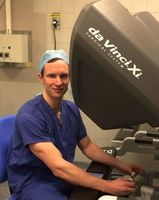
Mr Simon van Rij
Urological and Robotic Surgeon
Available at Allevia Hospital Ascot, 90 Green Lane East, Remuera, Auckland
-

Dr Andrew Williams
Urological and Robotic Surgeon
Available at all locations.
-

Dr Nadya York
Urological Surgeon
Available at Allevia Hospital Ascot, 90 Green Lane East, Remuera, Auckland
Procedures / Treatments
This is an enlargement of the prostate gland. In BPH there may be difficulties in passing urine as the enlarged prostate can cause a blockage. Patients with BPH often notice an increased urge to empty the bladder, especially at night. Many men over 60 years of age have some BPH. There are many different treatment options available for people with BPH. Most commonly your doctor can prescribe tablets to improve urinary function.
This is an enlargement of the prostate gland. In BPH there may be difficulties in passing urine as the enlarged prostate can cause a blockage. Patients with BPH often notice an increased urge to empty the bladder, especially at night. Many men over 60 years of age have some BPH. There are many different treatment options available for people with BPH. Most commonly your doctor can prescribe tablets to improve urinary function.
This is an enlargement of the prostate gland. In BPH there may be difficulties in passing urine as the enlarged prostate can cause a blockage. Patients with BPH often notice an increased urge to empty the bladder, especially at night. Many men over 60 years of age have some BPH. There are many different treatment options available for people with BPH. Most commonly your doctor can prescribe tablets to improve urinary function.
The foreskin is pulled away from the body of the penis and cut off, exposing the underlying head of the penis (glans). Stitches may be required to keep the remaining edges of the foreskin in place.
The foreskin is pulled away from the body of the penis and cut off, exposing the underlying head of the penis (glans). Stitches may be required to keep the remaining edges of the foreskin in place.
The foreskin is pulled away from the body of the penis and cut off, exposing the underlying head of the penis (glans). Stitches may be required to keep the remaining edges of the foreskin in place.
Incisions (cuts) are made in the abdomen (stomach) to allow access to your bladder. The vagina is lifted and attached to the pelvis wall, allowing the bladder neck to be supported, thus correcting urine leakage.
Incisions (cuts) are made in the abdomen (stomach) to allow access to your bladder. The vagina is lifted and attached to the pelvis wall, allowing the bladder neck to be supported, thus correcting urine leakage.
Incisions (cuts) are made in the abdomen (stomach) to allow access to your bladder. The vagina is lifted and attached to the pelvis wall, allowing the bladder neck to be supported, thus correcting urine leakage.
A long, thin tube with a tiny camera attached (cystoscope) is inserted into the urinary opening and through the urethra (the tube that carries urine from your bladder to the outside of your body) to your bladder. This allows the urologist to view any abnormalities in your lower urinary tract and, if necessary, take a small tissue sample to look at under the microscope (biopsy).
A long, thin tube with a tiny camera attached (cystoscope) is inserted into the urinary opening and through the urethra (the tube that carries urine from your bladder to the outside of your body) to your bladder. This allows the urologist to view any abnormalities in your lower urinary tract and, if necessary, take a small tissue sample to look at under the microscope (biopsy).
A long, thin tube with a tiny camera attached (cystoscope) is inserted into the urinary opening and through the urethra (the tube that carries urine from your bladder to the outside of your body) to your bladder. This allows the urologist to view any abnormalities in your lower urinary tract and, if necessary, take a small tissue sample to look at under the microscope (biopsy).
Incisions (cuts) are made in the side of the body, between the ribs and hip, to allow removal of one or both kidneys.
Incisions (cuts) are made in the side of the body, between the ribs and hip, to allow removal of one or both kidneys.
Incisions (cuts) are made in the side of the body, between the ribs and hip, to allow removal of one or both kidneys.
A tube is inserted into the kidney to allow urine to drain out. The tube may drain into a bag on the outside of your body (on your back) or may drain inside your body into the bladder.
A tube is inserted into the kidney to allow urine to drain out. The tube may drain into a bag on the outside of your body (on your back) or may drain inside your body into the bladder.
A tube is inserted into the kidney to allow urine to drain out. The tube may drain into a bag on the outside of your body (on your back) or may drain inside your body into the bladder.
A small incision (cut) is made in the groin on the side of the undescended testicle and the testicle pulled down into the scrotum. Sometimes a small cut will need to be made in the scrotum as well.
A small incision (cut) is made in the groin on the side of the undescended testicle and the testicle pulled down into the scrotum. Sometimes a small cut will need to be made in the scrotum as well.
A small incision (cut) is made in the groin on the side of the undescended testicle and the testicle pulled down into the scrotum. Sometimes a small cut will need to be made in the scrotum as well.
Scrotal: a small incision (cut) is made in the front of the scrotum and the testicles removed. This greatly reduces the amount of testosterone produced in the body. Inguinal: an incision is made in the groin to remove a testicle that: is undescended from childhood, has wasted away (atrophied), or has a tumour.
Scrotal: a small incision (cut) is made in the front of the scrotum and the testicles removed. This greatly reduces the amount of testosterone produced in the body. Inguinal: an incision is made in the groin to remove a testicle that: is undescended from childhood, has wasted away (atrophied), or has a tumour.
Scrotal: a small incision (cut) is made in the front of the scrotum and the testicles removed. This greatly reduces the amount of testosterone produced in the body.
Inguinal: an incision is made in the groin to remove a testicle that: is undescended from childhood, has wasted away (atrophied), or has a tumour.
A thin wire is inserted into your lower back and guided using x-ray imaging to your kidney. A small incision (cut) is then made on your back and a narrow tube is inserted and follows the guide wire to the kidney. The kidney stone(s) is then removed or broken up.
A thin wire is inserted into your lower back and guided using x-ray imaging to your kidney. A small incision (cut) is then made on your back and a narrow tube is inserted and follows the guide wire to the kidney. The kidney stone(s) is then removed or broken up.
A thin wire is inserted into your lower back and guided using x-ray imaging to your kidney. A small incision (cut) is then made on your back and a narrow tube is inserted and follows the guide wire to the kidney. The kidney stone(s) is then removed or broken up.
Incisions (cuts) are made in either the lower abdomen (stomach) or between the scrotum and the anus to allow removal of the enlarged parts of, or the entire, prostate gland.
Incisions (cuts) are made in either the lower abdomen (stomach) or between the scrotum and the anus to allow removal of the enlarged parts of, or the entire, prostate gland.
Incisions (cuts) are made in either the lower abdomen (stomach) or between the scrotum and the anus to allow removal of the enlarged parts of, or the entire, prostate gland.
Sling procedures are common surgical operations to stop stress incontinence. This is a condition where urine leaks out when movements, such as coughing, laughing or sneezing put pressure on the bladder. Stress incontinence occurs when the muscles supporting the urethra (tube that carries the urine out of the body) become weak and the urethra no longer works well as a valve to keep the urine in the bladder. Sometimes this results from the effects of childbirth. Sling procedures provide support to the weakened muscles so the urethra won’t accidentally release urine when there is pressure on the bladder.
Sling procedures are common surgical operations to stop stress incontinence. This is a condition where urine leaks out when movements, such as coughing, laughing or sneezing put pressure on the bladder. Stress incontinence occurs when the muscles supporting the urethra (tube that carries the urine out of the body) become weak and the urethra no longer works well as a valve to keep the urine in the bladder. Sometimes this results from the effects of childbirth. Sling procedures provide support to the weakened muscles so the urethra won’t accidentally release urine when there is pressure on the bladder.
Sling procedures are common surgical operations to stop stress incontinence. This is a condition where urine leaks out when movements, such as coughing, laughing or sneezing put pressure on the bladder. Stress incontinence occurs when the muscles supporting the urethra (tube that carries the urine out of the body) become weak and the urethra no longer works well as a valve to keep the urine in the bladder. Sometimes this results from the effects of childbirth. Sling procedures provide support to the weakened muscles so the urethra won’t accidentally release urine when there is pressure on the bladder.
A long, thin tube with a tiny camera attached (resectoscope) is inserted into the urinary opening, through the urethra and into the bladder. Instruments are passed through the resectoscope and the tumour removed.
A long, thin tube with a tiny camera attached (resectoscope) is inserted into the urinary opening, through the urethra and into the bladder. Instruments are passed through the resectoscope and the tumour removed.
A long, thin tube with a tiny camera attached (resectoscope) is inserted into the urinary opening, through the urethra and into the bladder. Instruments are passed through the resectoscope and the tumour removed.
A long, thin tube with a tiny camera attached (resectoscope) is inserted into the urinary opening of the penis and through the urethra (the tube that carries urine from your bladder to the outside of your body) to your bladder. The urologist is then able to view the prostate gland and, by passing an instrument through the resectoscope, is able to remove the part of the gland that has become enlarged.
A long, thin tube with a tiny camera attached (resectoscope) is inserted into the urinary opening of the penis and through the urethra (the tube that carries urine from your bladder to the outside of your body) to your bladder. The urologist is then able to view the prostate gland and, by passing an instrument through the resectoscope, is able to remove the part of the gland that has become enlarged.
A long, thin tube with a tiny camera attached (resectoscope) is inserted into the urinary opening of the penis and through the urethra (the tube that carries urine from your bladder to the outside of your body) to your bladder. The urologist is then able to view the prostate gland and, by passing an instrument through the resectoscope, is able to remove the part of the gland that has become enlarged.
A long, thin tube with a tiny camera attached (ureteroscope) is inserted into the urinary opening, through the urethra (the tube that carries urine from your bladder to the outside of your body) and bladder to the ureters (the two tubes that drain urine from the kidneys to the bladder). This allows the urologist to view and, in some cases, treat any problems in the ureters.
A long, thin tube with a tiny camera attached (ureteroscope) is inserted into the urinary opening, through the urethra (the tube that carries urine from your bladder to the outside of your body) and bladder to the ureters (the two tubes that drain urine from the kidneys to the bladder). This allows the urologist to view and, in some cases, treat any problems in the ureters.
A long, thin tube with a tiny camera attached (ureteroscope) is inserted into the urinary opening, through the urethra (the tube that carries urine from your bladder to the outside of your body) and bladder to the ureters (the two tubes that drain urine from the kidneys to the bladder). This allows the urologist to view and, in some cases, treat any problems in the ureters.
An incision (cut) is made in the penis and the narrowed part of the urethra (the tube that carries urine to the outside of your body) is removed and the urethra rejoined. In balloon urethroplasty, a thin tube with a balloon attached is inserted into the opening of the penis. When it reaches the narrowed part of the urethra, the balloon is inflated, thus widening the urethra.
An incision (cut) is made in the penis and the narrowed part of the urethra (the tube that carries urine to the outside of your body) is removed and the urethra rejoined. In balloon urethroplasty, a thin tube with a balloon attached is inserted into the opening of the penis. When it reaches the narrowed part of the urethra, the balloon is inflated, thus widening the urethra.
An incision (cut) is made in the penis and the narrowed part of the urethra (the tube that carries urine to the outside of your body) is removed and the urethra rejoined.
In balloon urethroplasty, a thin tube with a balloon attached is inserted into the opening of the penis. When it reaches the narrowed part of the urethra, the balloon is inflated, thus widening the urethra.
If a man decides he does not want to father children, he may choose to have a vasectomy which is a simple and effective method of sterilisation. During this surgical procedure, the vas deferens (the tubes carrying sperm from the testicles to the penis) are cut. A vasectomy can be carried out in a doctor's surgery and takes between 30 and 60 minutes.
If a man decides he does not want to father children, he may choose to have a vasectomy which is a simple and effective method of sterilisation. During this surgical procedure, the vas deferens (the tubes carrying sperm from the testicles to the penis) are cut. A vasectomy can be carried out in a doctor's surgery and takes between 30 and 60 minutes.
If a man decides he does not want to father children, he may choose to have a vasectomy which is a simple and effective method of sterilisation.
During this surgical procedure, the vas deferens (the tubes carrying sperm from the testicles to the penis) are cut. A vasectomy can be carried out in a doctor's surgery and takes between 30 and 60 minutes.
Disability Assistance
Wheelchair access, Mobility parking space
Parking
Mobility parking and wheelchair access are available.
Website

Contact Details
Allevia Hospital Ascot, 90 Green Lane East, Remuera, Auckland
Central Auckland
-
Phone
(09) 520 9500
-
Fax
(09) 520 9501
Website
90 Green Lane East
Remuera
Auckland
Street Address
90 Green Lane East
Remuera
Auckland
Was this page helpful?
This page was last updated at 11:02AM on February 18, 2026. This information is reviewed and edited by Allevia Hospitals | Urological Surgery.